The cell's natural pathway
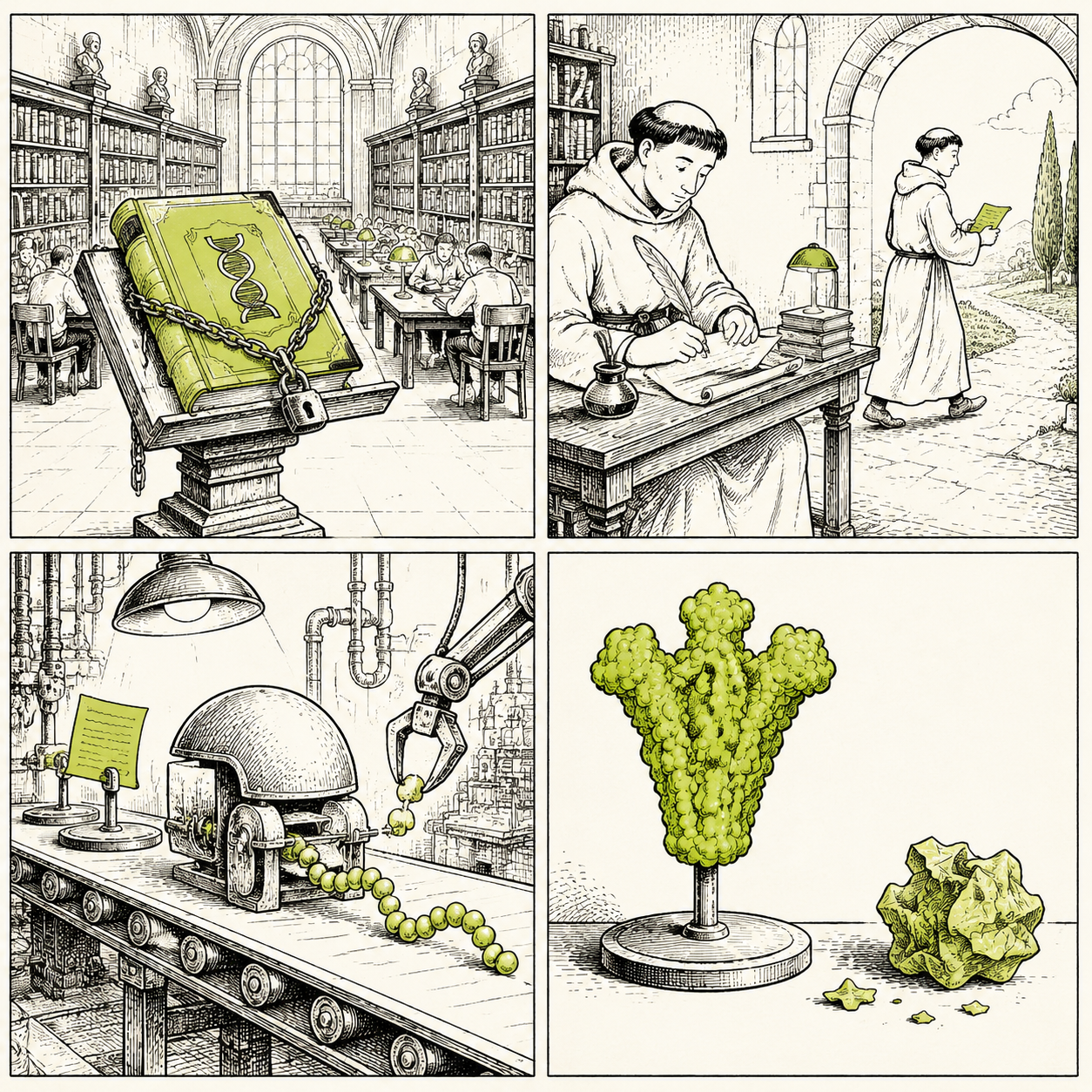
Your body makes messenger RNA all the time: it is the courier that copies a recipe from the DNA (which stays in the nucleus, like a library book that never leaves) and carries it to the cell's protein factories. The courier works for hours or days, then is destroyed.
The vaccine delivers an already-written manual: the recipe for a single viral protein (the spike). Nothing else. No whole virus, no possibility of infection.
Why it can't change your DNA
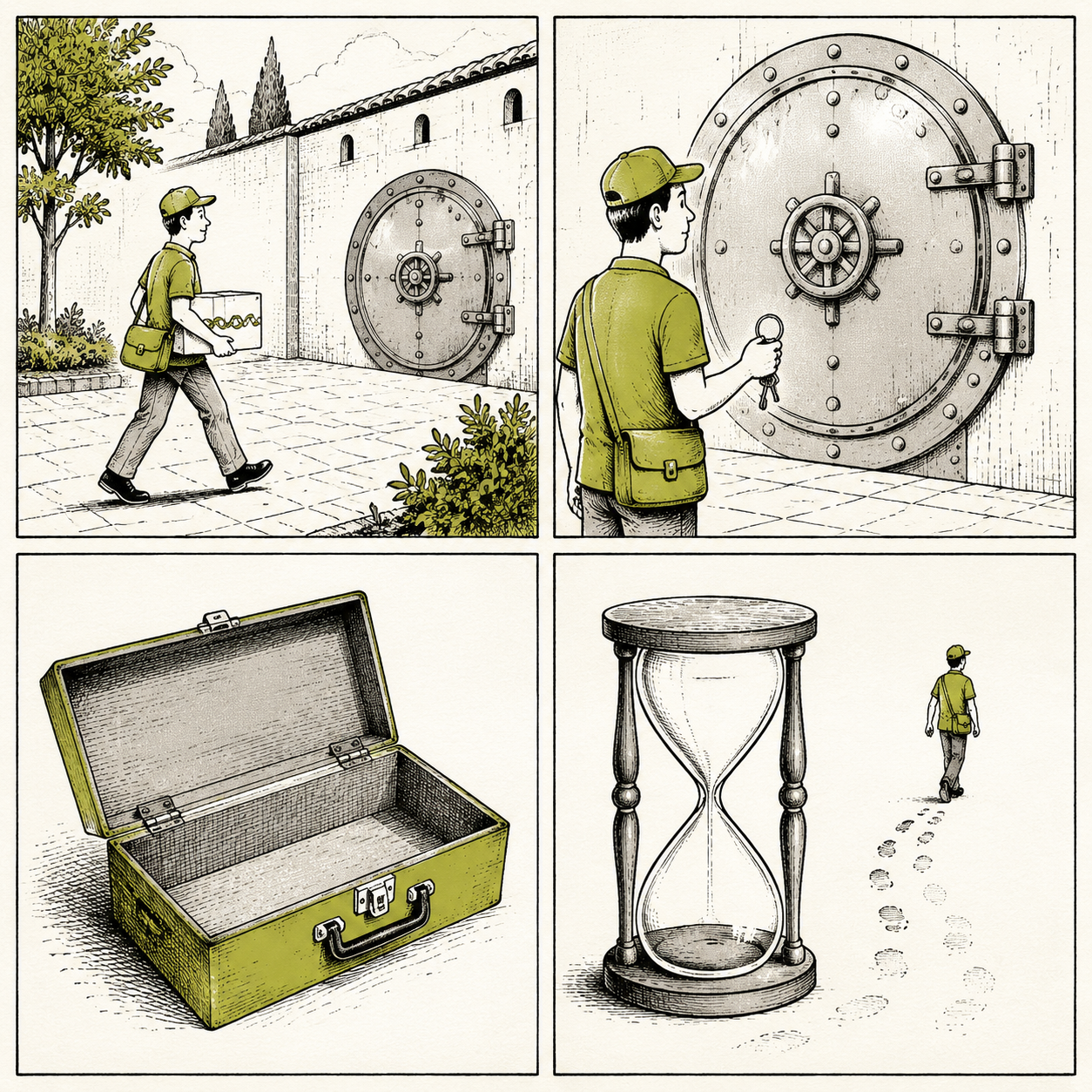
Three physical reasons, not promises:
1. Direction. Vaccine mRNA is translated in the cytoplasm, outside the nucleus where DNA lives. It carries no nuclear localization signal and no motor to get in.
2. Tools. Inserting into DNA requires a specific enzyme (an integrase, the kind HIV uses). The vaccine's mRNA neither carries one nor instructs the cell to build one.
3. Lifetime. It degrades within days. To alter the genome it would need to persist and integrate: it does neither.
A decade of failures
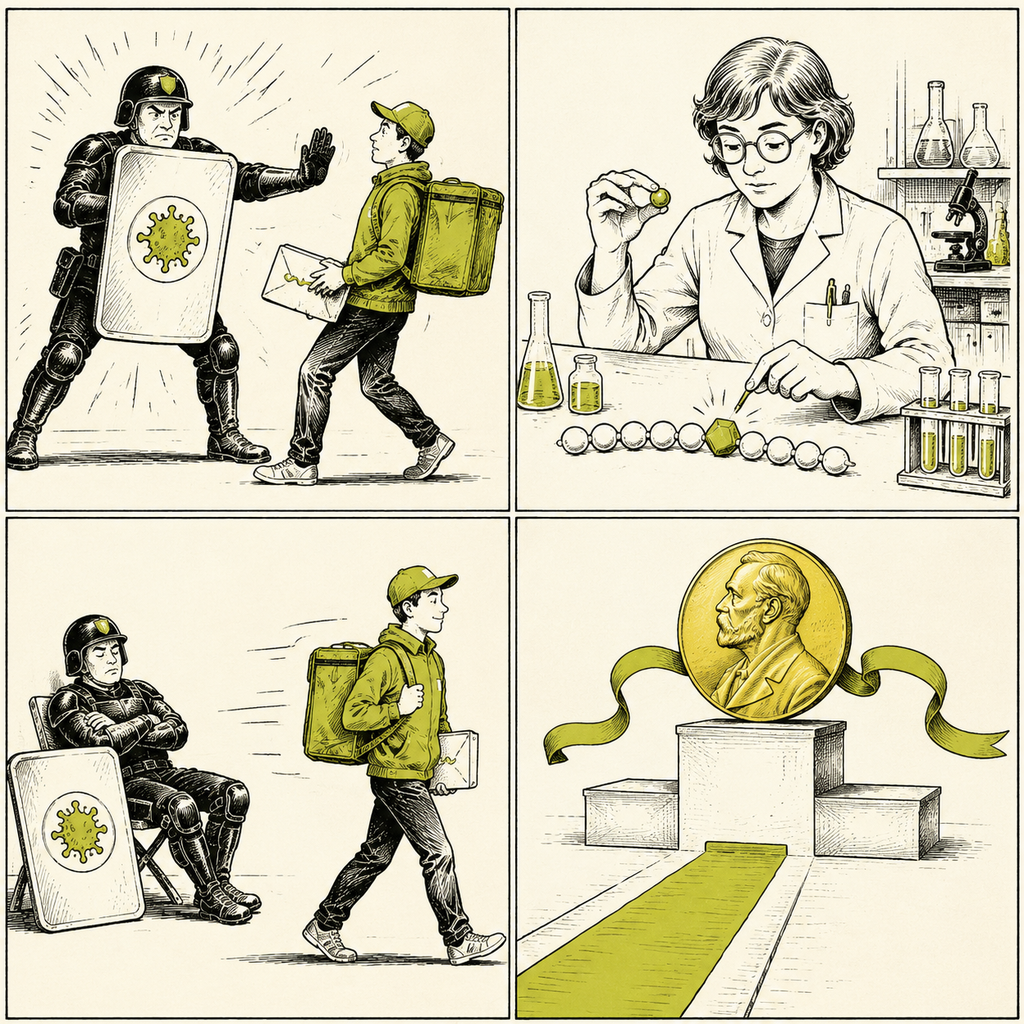
Artificial mRNA used to trigger a violent immune response: the body treated it as an invader and destroyed it before it could produce anything. Katalin Kariko and Drew Weissman solved this in 2005 with a minimal chemical tweak (modified nucleosides) that makes the mRNA effectively invisible to the detector.
Eighteen years after that paper came the 2023 Nobel in Medicine. Without it, there would have been no vaccines in 2020.
mRNA ≠ CRISPR ≠ gene therapy
The myth that "RNA vaccines are gene therapy" blends three different things. The honest table:
| Enters DNA? | What it does | Duration | |
|---|---|---|---|
| RNA vaccine | No | Temporary manual for one protein | Days |
| CRISPR | Yes (it edits) | Cuts and corrects genome text | Permanent |
| Classic gene therapy | Yes (adds a copy) | Delivers a working gene | Permanent |
Calling the vaccine "gene therapy" is like calling a sticky note "surgery": same desk, different action.