The two pieces

CRISPR works with two separable pieces. The guide RNA (about 20 letters) is the search function: it matches the exact DNA sentence you want to edit. The Cas9 enzyme is the scissors: it cuts both strands right where the guide docked.
Changing the guide takes days and little money. That simplicity is why gene editing went from a handful of labs worldwide to thousands in under a decade.
The cell mends
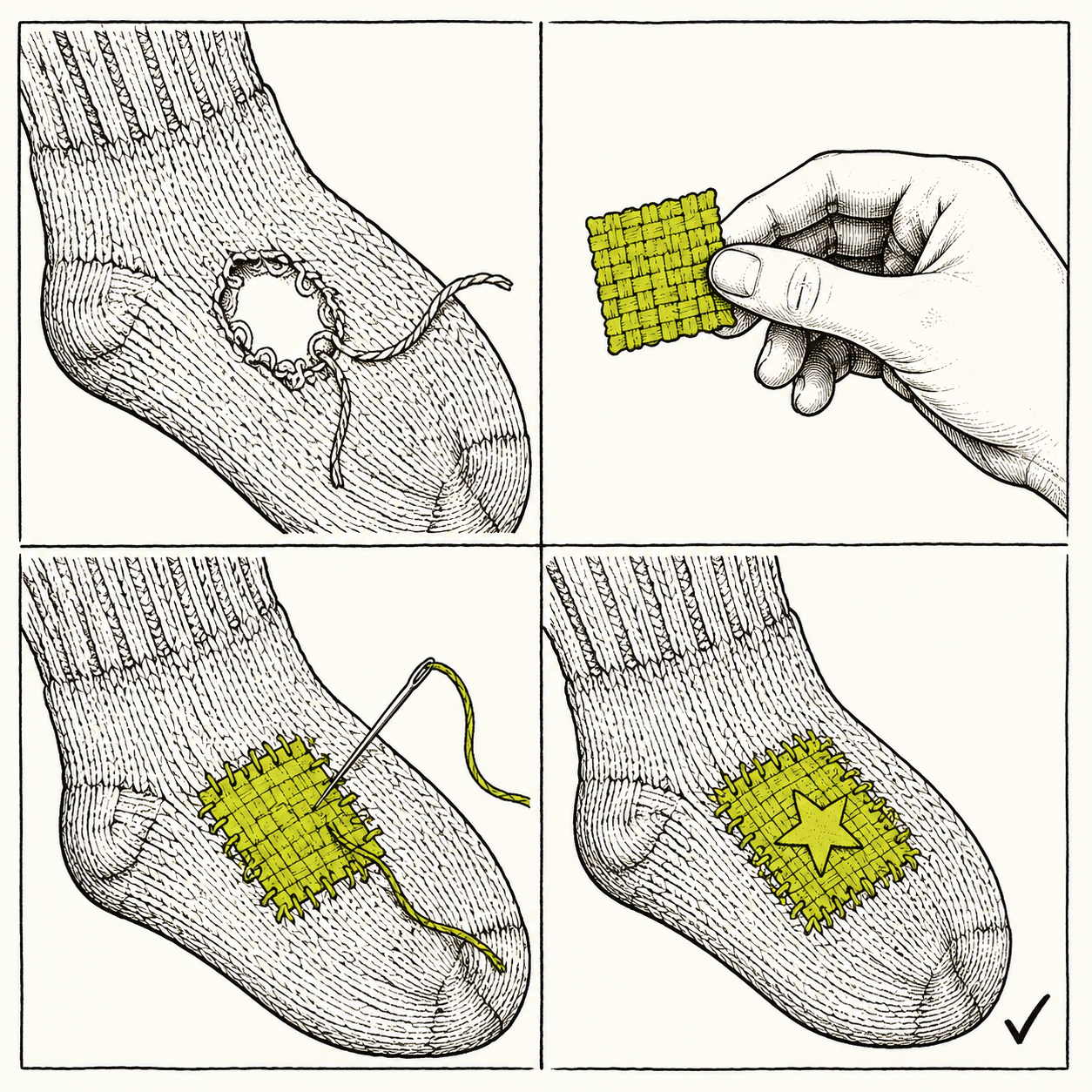
The final trick is not performed by CRISPR: the cell does it. Every living cell repairs broken DNA, and while patching the cut it introduces changes. Design that patch, and the edit becomes deliberate.
That is why the proofreader metaphor is exact: CRISPR underlines the typo; the book itself rewrites it.
The history in four dates
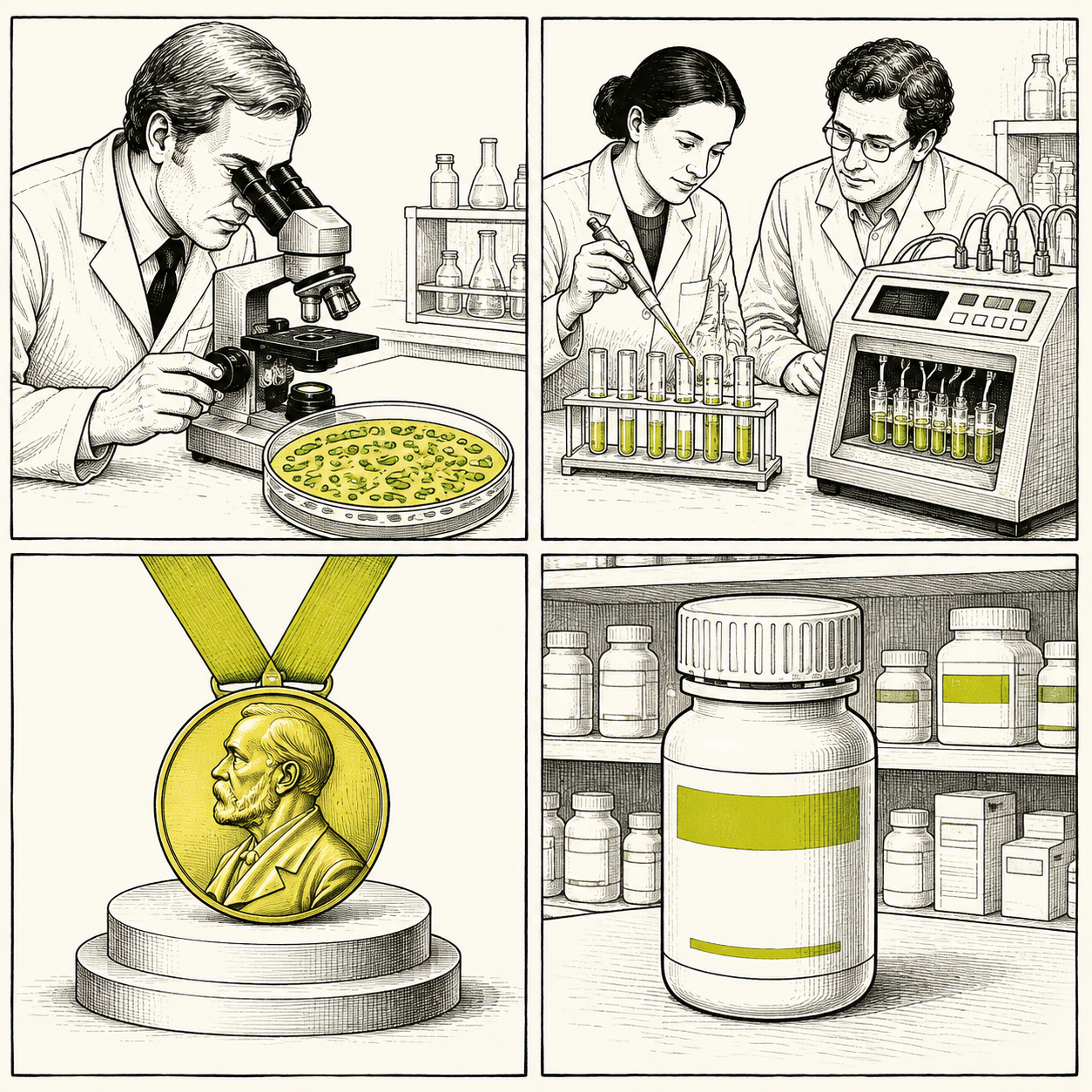
1987. Yoshizumi Ishino spots a strange repeated sequence in E. coli. Nobody knows what it is for: the paper itself leaves the function as unknown.
2012. Emmanuelle Charpentier and Jennifer Doudna show the bacterial system can be reprogrammed in a test tube: you choose the guide, Cas9 cuts where you say (Jinek et al., Science).
2020. The Chemistry Nobel crowns that paper.
2023. Casgevy becomes the world's first authorized CRISPR medicine (MHRA, 16 November 2023).
And in humans?
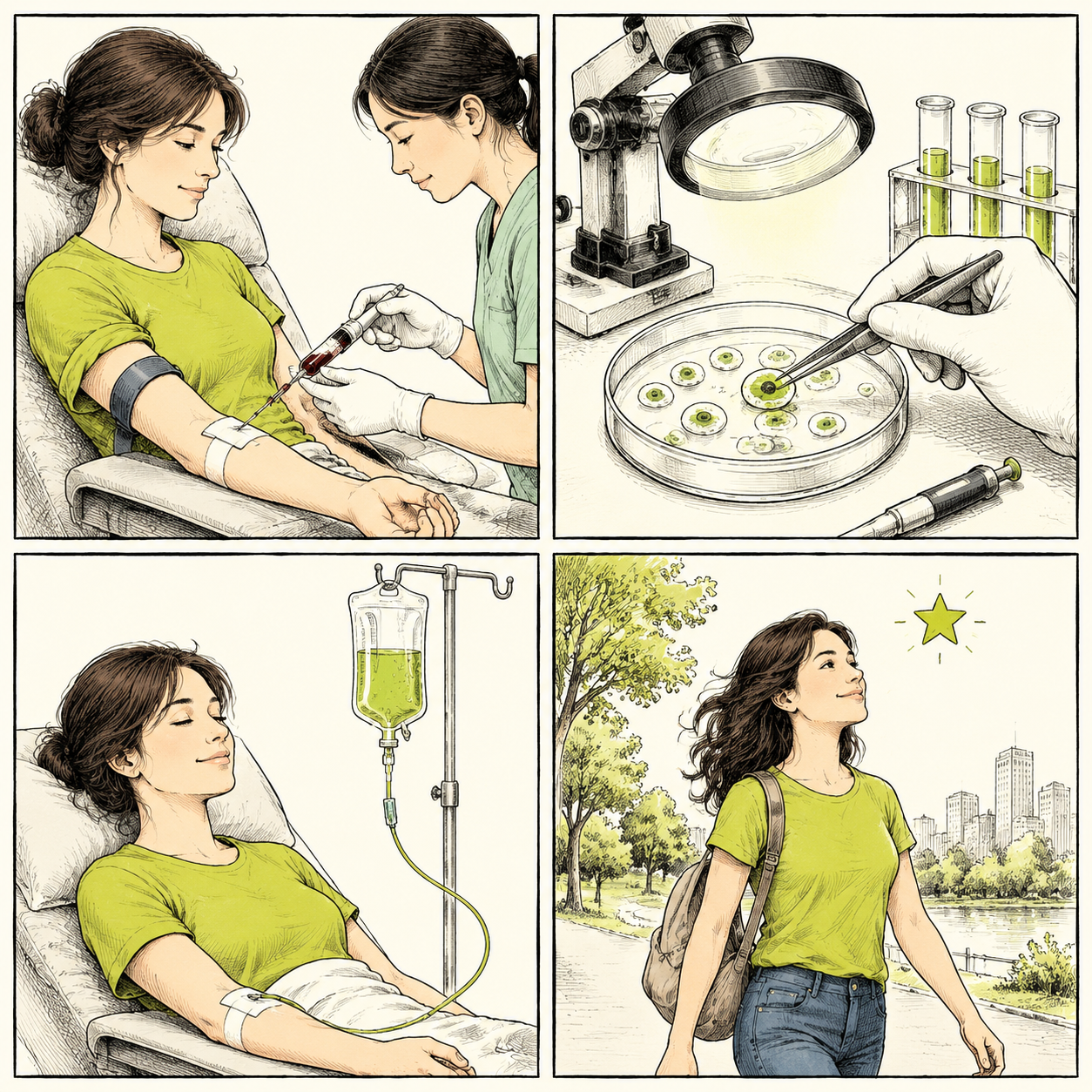
In December 2023 the US FDA approved Casgevy for sickle cell disease (and in January 2024 for beta-thalassemia). This is not a trial or a promise: it is a treatment with a price and real patients.
The process is ex vivo: stem cells are taken from the patient, edited in the lab to reactivate fetal hemoglobin, and returned to the body. The honest frontier: editing directly inside a living adult (in vivo) is still in clinical trials, not at the pharmacy.