Genetic circuits
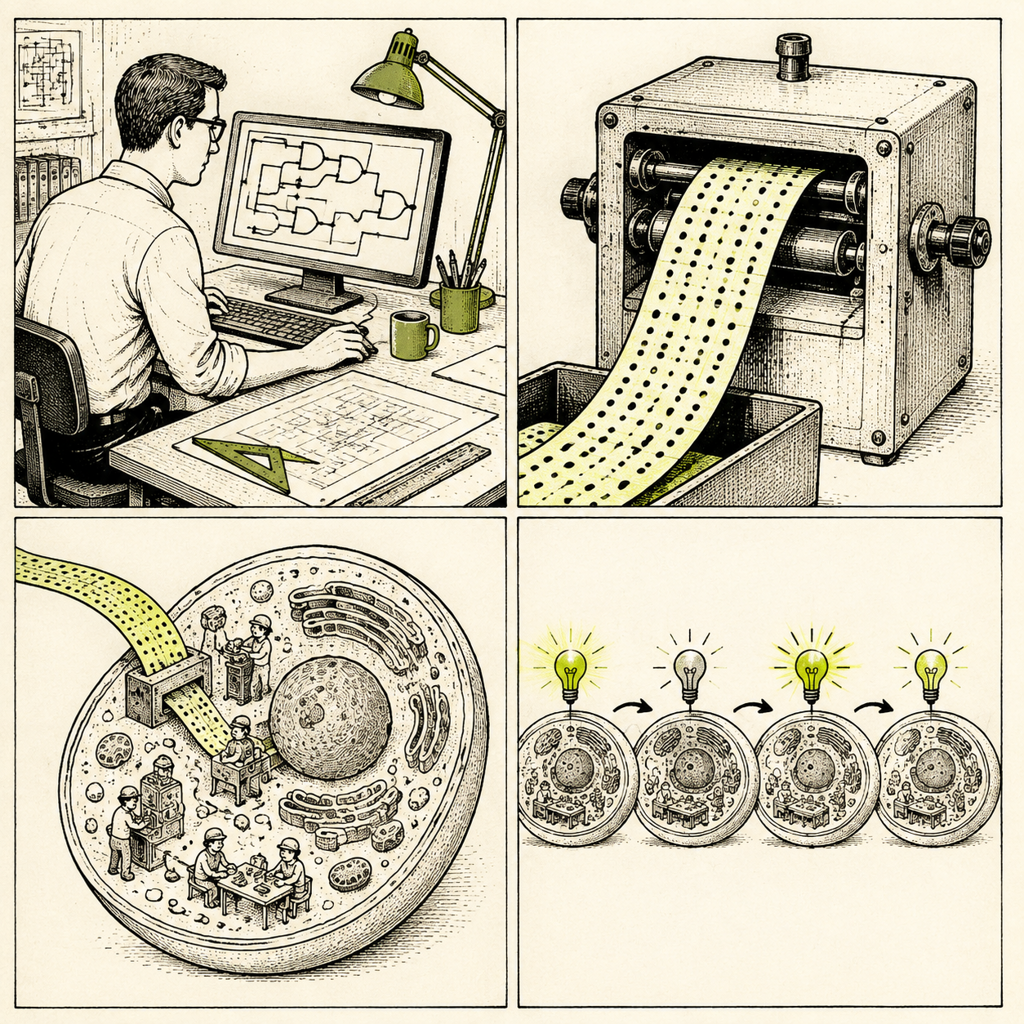
The core idea: treat genes as standardized parts wired together with logic ("if pollutant present, emit light"; "if sugar present, make the drug"). A genetic circuit is designed on a computer, chemically synthesized, and installed in a cell.
This is not a metaphor: the first genetic circuit (an oscillator that made cells blink, Elowitz and Leibler, 2000) opened the modern discipline.
What it already makes
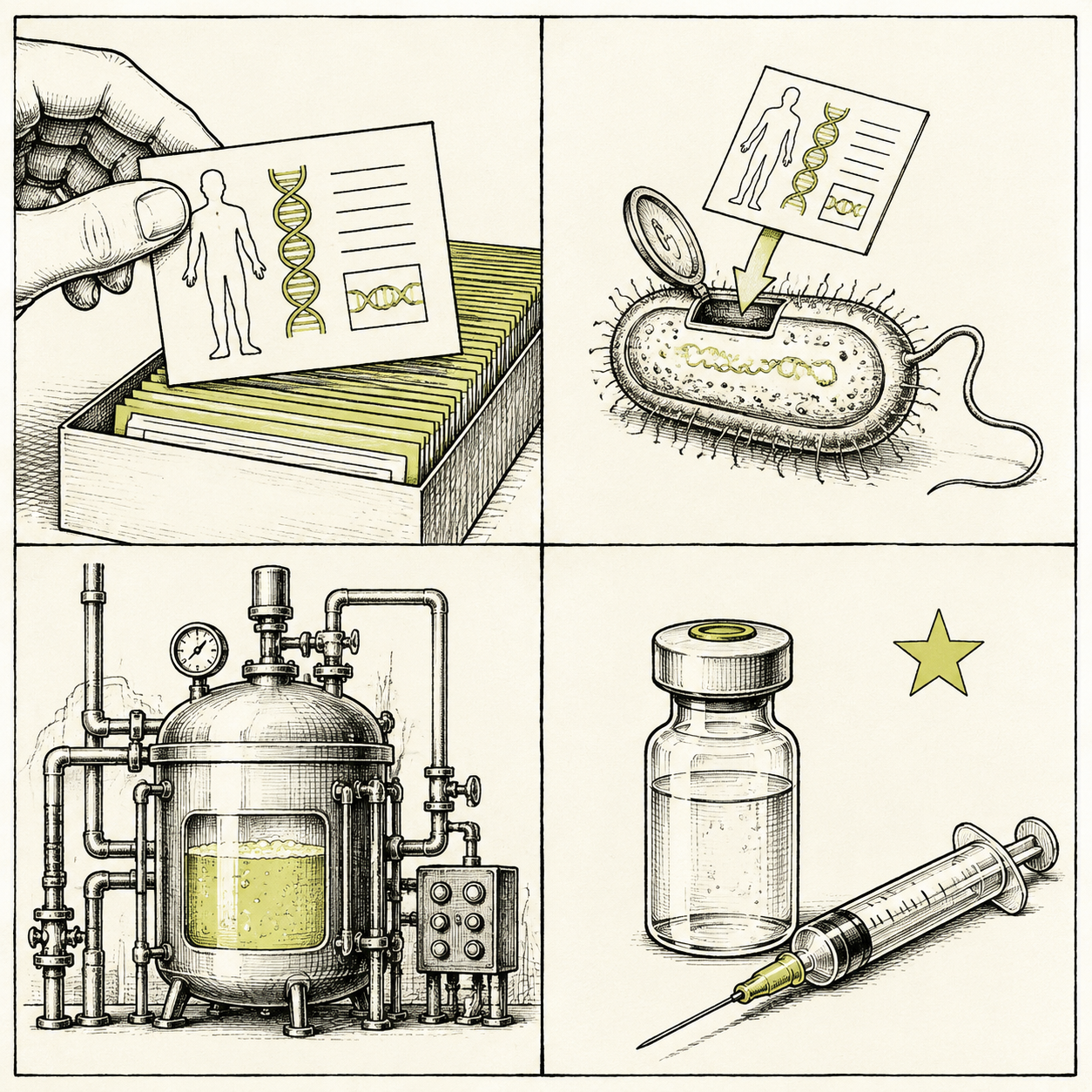
Insulin. Since 1982, bacteria carrying the human insulin gene. Every injecting diabetic uses a product of everyday genetic engineering.
Precision fermentation. Yeasts that make milk or egg proteins without cows or hens; enzymes for detergents; vitamins. This is the industrial, least-discussed face of the field.
Materials. Biofabricated nylon, spider silk from yeast, bioplastics.
The honest frontier: most of these processes are more expensive than the petrochemical alternative and compete in niches (medicine, cosmetics), not mass industrial volume.
The real limits
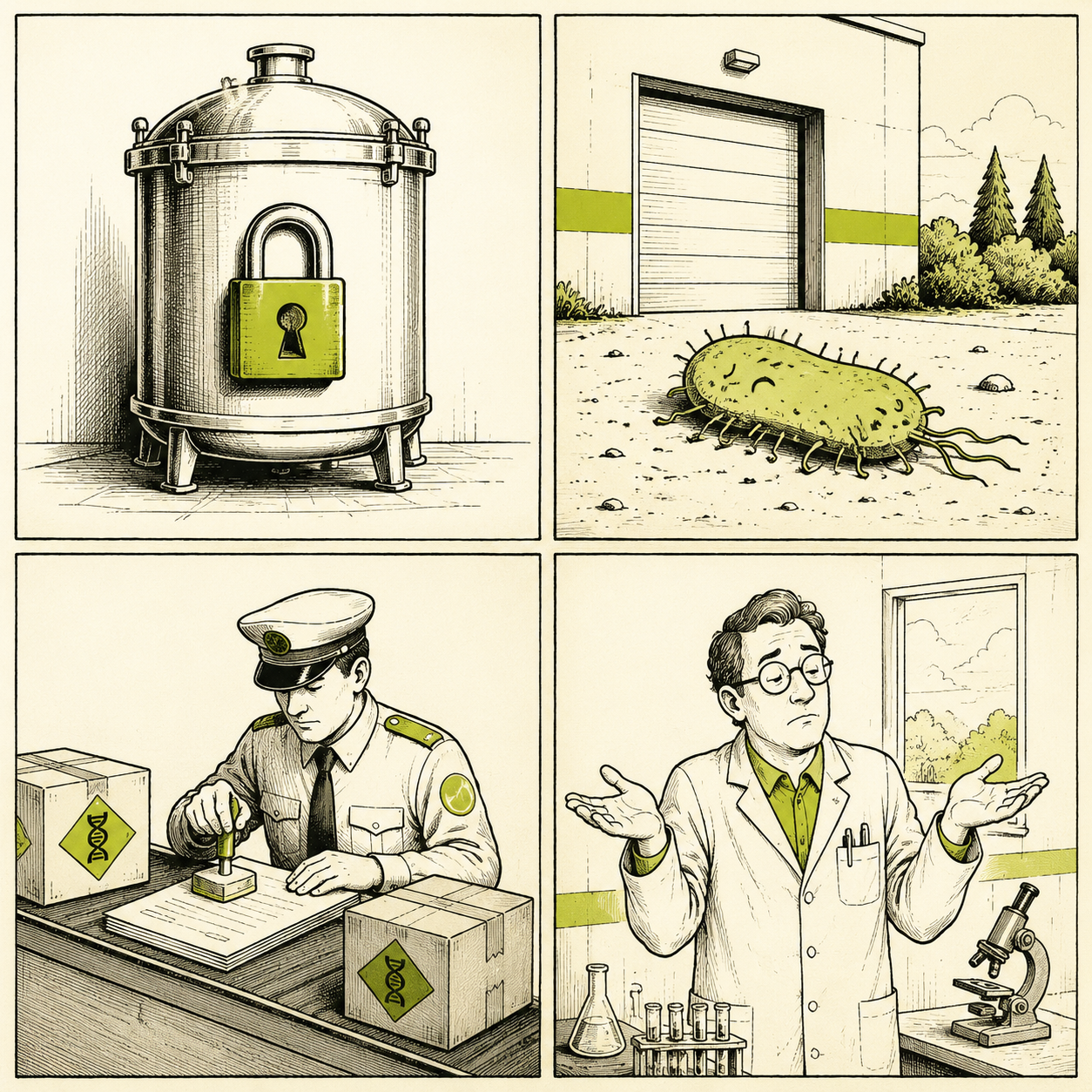
Industrial organisms live in closed reactors and are weakened so they cannot survive outside. The serious 2026 debates are elsewhere: preventing malicious use (pathogen synthesis), oversight of synthetic DNA, and what would happen if a designed organism escaped into the environment.
International oversight frameworks exist (UN Convention on Biological Diversity protocols, commercial DNA-synthesis screening). The field is neither lawless nor fully resolved.